LE PALAIS ROYAL
Who are we?
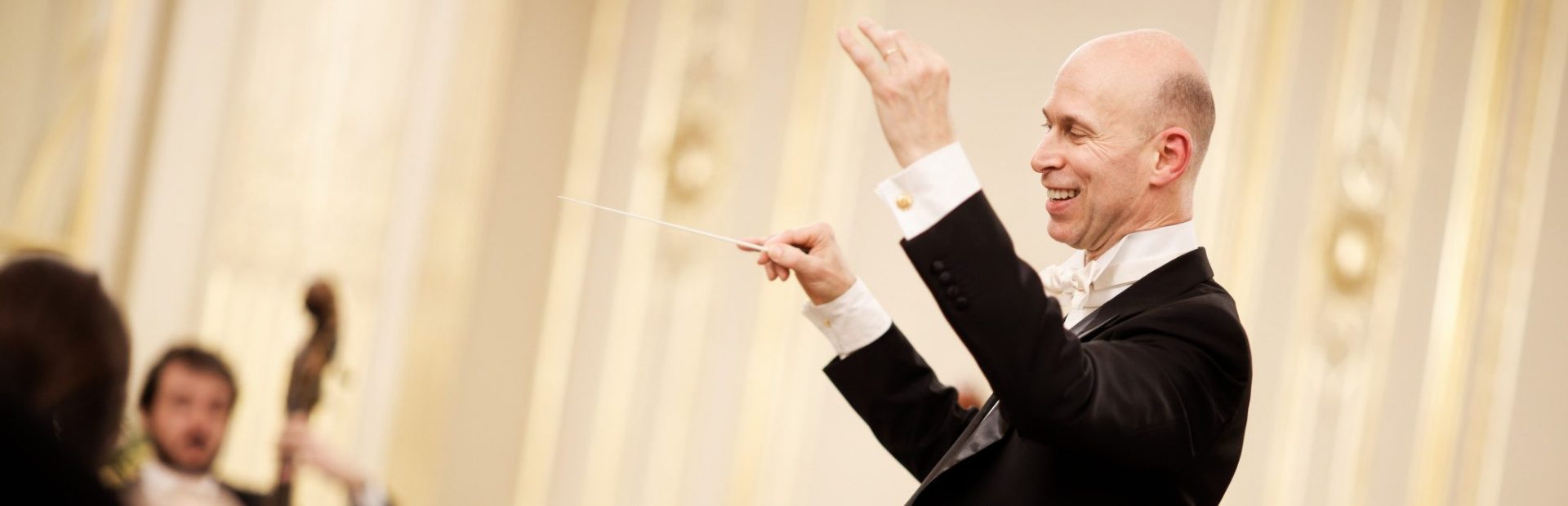
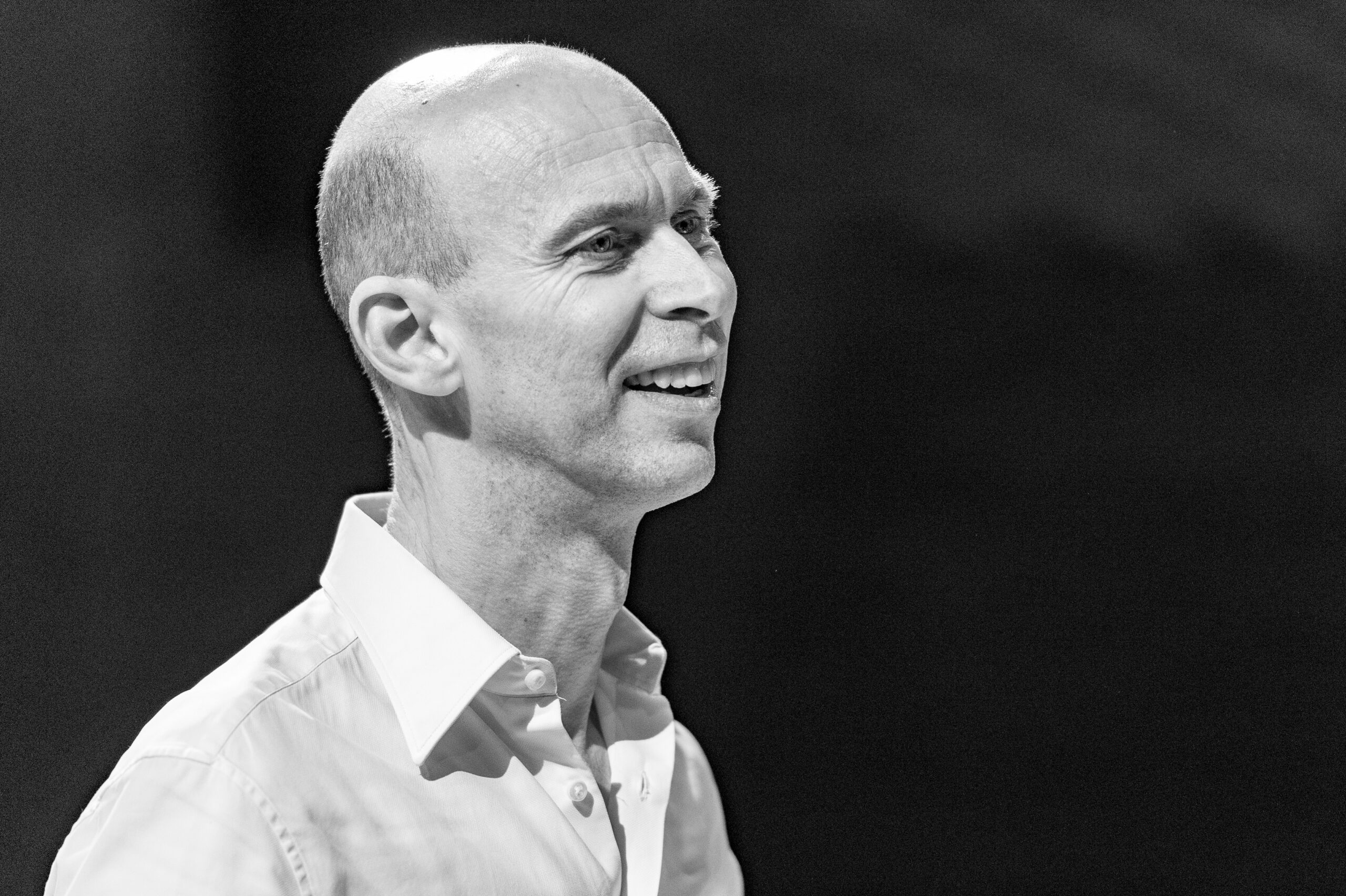
Jean-Philippe Sarcos, musical direction
The energy, elegance, infectious enthusiasm and artistic gifts of Jean-Philippe Sarcos make him a conductor renowned in particular for his interpretations of the French repertoire.
He conducts on the greatest French and international stages: the Théâtre des Champs-Élysées, La Seine Musicale, the Alte Oper in Frankfurt… He gave the French premiere of Elgar’s Coronation Ode at the Salle Pleyel. The sole pupil of Georges Prêtre, he inherited from his master a love of the French repertoire, from the Baroque to the Romantic.
Music director of Le Palais royal, he has notably performed the complete Beethoven concertos and symphonies on period instruments. His recordings include the first-ever recording of the sacred works of Mel Bonis and Paradisi Gloria, released in 2024 on the Aparté label.
The Orchestra
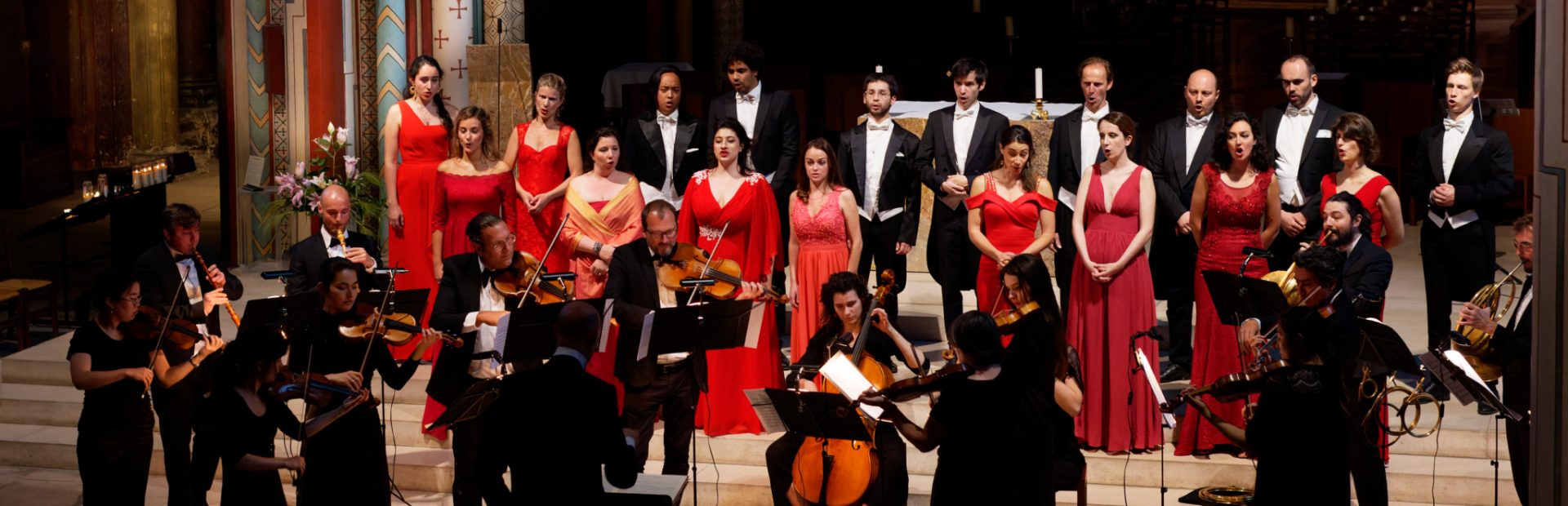
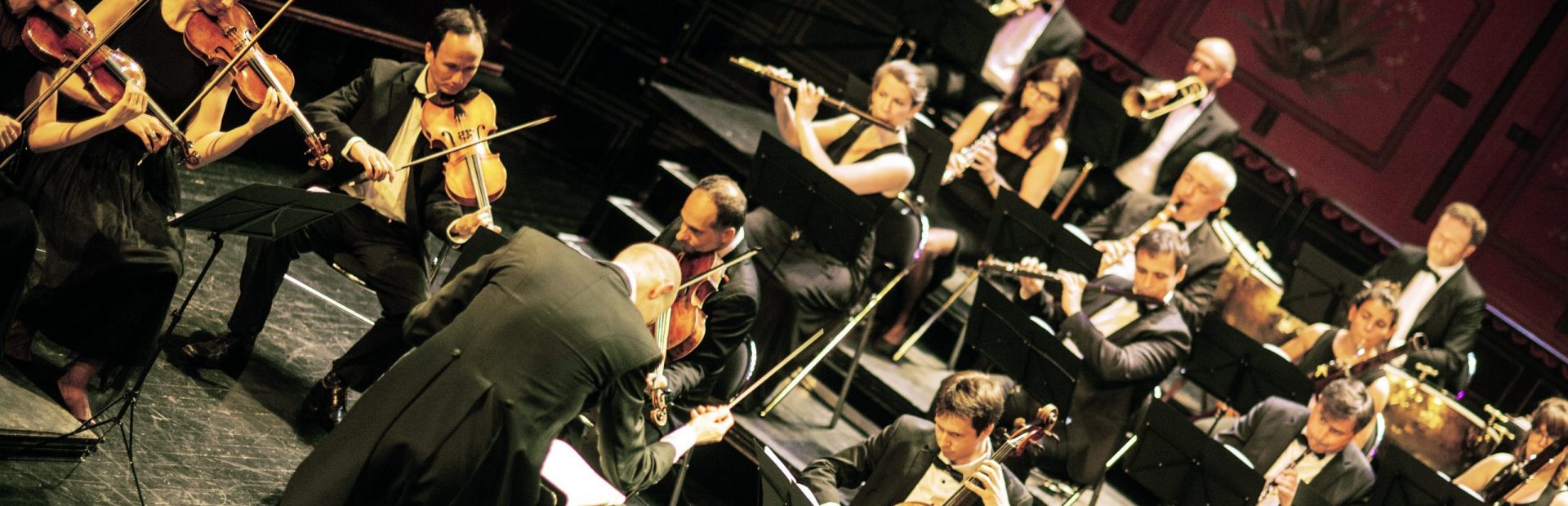
Founded in 2010, Le Palais royal is an orchestra playing on period instruments. Renowned for its energy and the vitality of its interpretations, it performs a repertoire ranging from the late 17th century to the mid-20th century. It owes its singular musical signature to its conductor, Jean-Philippe Sarcos.
Its credo: to make every concert unique by fostering closeness, wonder and sharing with the audience. Before playing, Jean-Philippe Sarcos introduces the works to listeners from both a historical and a philosophical angle, and shows what these works can offer us today.
An artistic vision in three strands
French music of the 19th century. The sole pupil of Georges Prêtre, Jean-Philippe Sarcos inherited his taste for French music. He has recently performed the symphonies of Franck, Lalo, Bizet, Berlioz and Saint-Saëns, the piano and violin concertos and Saint-Saëns’s oratorios Le Déluge and La Terre promise, as well as numerous works by Fauré, Widor, Paladilhe, Poulenc…
The music of the turn of the 18th century, with Mozart, Beethoven, Haydn and Mendelssohn. Le Palais royal has performed the complete Beethoven symphonies on period instruments, rediscovered the original French versions of Haydn’s The Creation and The Seasons, while continuing its exploration of Mendelssohn’s symphonic and choral output.
Baroque music, in particular that of Handel, of whom Jean-Philippe Sarcos is especially fond. Thus Glory and Haendel, musiques royales are among Le Palais royal’s flagship programmes.
Working with talented soloists (Mathias Vidal, Marion Vergez-Pascal, Juliette Mey, Orlando Bass), Le Palais royal continually renews period-instrument performance through new concert formats and innovative approaches.
On the French musical scene, Le Palais royal stands out as a true conveyor of history, music, enthusiasm and emotion. It does not hesitate to programme rare works alongside masterpieces of the repertoire, as on the album Paradisi Gloria, released in 2024 on Aparté.
The Choir
Background
From the ages of 14 to 18, alongside a complete musical education, Jean-Philippe Sarcos was guided by various choirmasters, including Denis Dupays, then chorus master at the Capitole de Toulouse. He also studied Gregorian chant in depth at Solesmes Abbey with Dom Jean Clair, the abbey’s choirmaster, who passed on to him a love of the suppleness of unaccompanied melodies and made him attuned to the shaping of musical discourse and to verbal rhythm.
At 19, he came to Paris, where he was taught by great masters of the voice: William Christie, who admitted him to his class at the CNSMDP and for three years taught him the secrets of early music; Yvonne Pons, his singing teacher for eight years, who passed on to him a vision of French singing in which diction must come first — precise articulation and clear consonants so that each finely chiselled word is intelligible. After Yvonne Pons’s death, he worked for ten years with Ana Maria Miranda, who stressed the precise definition of every vowel: “If the vowel is beautiful, the voice will be beautiful.”
These two complementary visions would have a decisive influence on the sound of the Palais royal choir, where voices must be full, bright, natural and free of tension. Having conducted choirs without interruption from the age of 14, Jean-Philippe Sarcos founded the Palais royal choir in 2010, the fruit of past experiences that had developed his taste for and knowledge of the voice and of singers.
The Palais royal sound
For historical and philosophical reasons, the sound of the Palais royal choir is distinctive and recognisable. The expressive commitment of each singer is given priority throughout rehearsals and, of course, in concert. Choral work aims above all to let each singer feel free to use their full voice, as they would as a soloist and as was the practice for centuries.
The requirement to perform from memory in every production — beyond the expressiveness and closeness it fosters with the other singers and with the audience — is a particularly formative exercise for the singers, who encounter the same rule in opera. It is from this freedom of each individual that Jean-Philippe Sarcos finds and polishes a natural ensemble homogeneity: the conductor’s vision starts from reality rather than from an idealised sound. The result is both audible and visible.
What makes the choir unique
Jean-Philippe Sarcos’s charismatic personality, his original approach to choral sound and his ability to bring singers together in a shared, generous energy create a troupe spirit that sets the Palais royal choir apart in the landscape of professional choirs in France. Among the elements that make it distinctive: a wide repertoire, from Buxtehude to Poulenc; singing from memory, often with scattered voice parts, including in oratorio; its own orchestra animated by the same principles; work on text, diction, tonic accents and the colours of language; and the freedom of interpretation given to each singer to achieve total commitment.
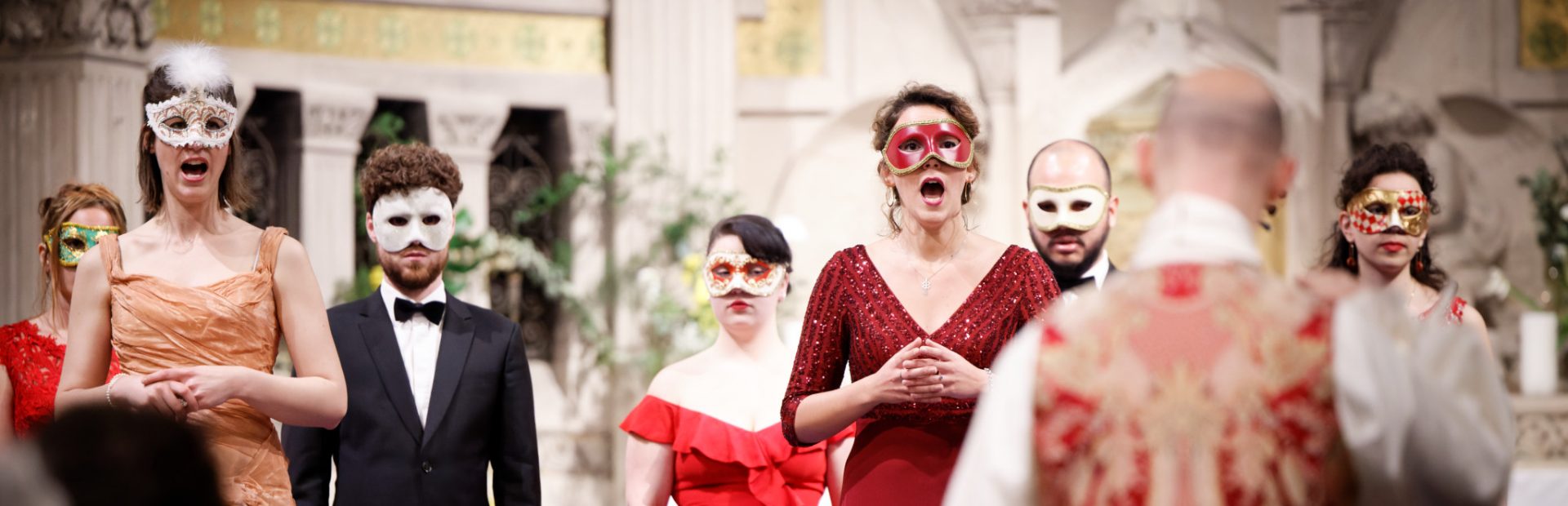
Since its creation in 2010, the choir has been at the heart of large-scale projects: Virtuosité baroque (2010), Haendel, musiques royales (2012), Campra’s Requiem (2013), Vivaldi masqué (2014), Rameau et l’esprit français (2014), Joie baroque (premiered in 2016 and revived in 2018 at La Seine Musicale), La Création (2016) and Haydn’s Les Saisons (2017), the last two oratorios in their original French versions.
Since 2018, Le Palais royal has been creating musical-theatre productions for choir with ambitious and little-known repertoire. March 2018 saw the birth of Tout est Lumière, a staged concert resembling an opera for choir, directed by Benjamin Prins: a troupe spirit, close to the world of musical theatre, transforms the Palais royal choir into a chorus of singer-actors unlike any other. In March 2019, Le Palais royal created Berlioz le fantastique – Épisodes de la vie d’un artiste in the same format. In November 2019, it premiered Glory at La Seine Musicale, with masterly works for choir and orchestra by Handel. In May 2020 came the third instalment of these staged choral productions: Les derniers jours de Pompéi, in partnership with the Grand Palais.
The choir on video
Discover the great moments of the Palais royal choir on our YouTube channel: